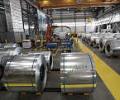
Recent reform measures announced by the government expected to boost the sector.

The 30- Share BSE Sensex ended 19924 up 22 points or 0.11 per cent, while the broader 50-share NSE Nifty closed down by 2 points or 0.01 pct at 5907.

The latest PMI showed inflation pressures ebbed further last month with both costs of raw material and prices charged rising at a slower pace than March.

ONGC, Sesa Sterlite, Tata Steel, RIL and HDFC emerged as the biggest losers


Economic recovery in US, euro zone help; new orders sub-index at 52.4
The pace of activity in China's vast manufacturing sector quickened for the first time in 13 months in November, a survey of private factory managers found, adding to evidence that the economy is reviving after seven quarters of slowing growth.

HSBC's purchasing managers' index was released on Tuesday.

India's manufacturing expanded at a faster pace than China

Expenditure cuts necessitated by slowing revenue growth, weak industrial activity worrisome portents
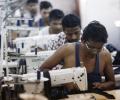
That prompted manufacturers to add jobs for the first time since June.
The survey showed firms passed on a greater cost burden to consumers. Prices charged rose at their fastest pace since October.

The HSBC Markit Services Purchasing Managers' Index fell to 51.7 in June from May's three-month high of 53.6, in a sign that Asia's third-largest economy is still struggling to climb out of a quagmire of low growth and high inflation.

India's manufacturing sector activity remained broadly flat in June as new orders declined for the first time in over four years and power cuts and fragile economic conditions weighed on the sector's performance, an HSBC survey said.

Investment trend by foreign investors will also be closely watched for stock movement

One of India's main export destinations, the euro zone, is struggling to revive its economy and battling disinflation.

India's private sector activity contracted further in August, reflecting faster contractions of both manufacturing and services output, amid decline in new orders and tough economic conditions.
The RBI left interest rates unchanged, saying there was no substantial development on inflation or fiscal fronts to warrant a fresh reduction.

The survey showed firms' confidence regarding future business grew at the slowest pace in a year last month.

Sensex hit a record high of 27,225.85 and Nifty hit a record high of 8,141.90 in the intra-day trades today.
.jpg)
Although the survey pointed to the softness in demand leveling off, a complete recovery is still some way off.

The market breadth in BSE remains positive with 1,554 shares advancing and 1,196 shares declining.

Manufacturing growth in India lost momentum in February.
.jpg)
The rupee was last at 62.05/06 after gaining to as high 61.9650 against the dollar, its highest since Nov 19. It had closed at 62.44/45 on Friday.

The index went below the crucial 50 mark.

According to bankers and economists, there is room for further rate cut by the RBI as retail and wholesale inflation rates have remained benign.
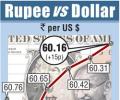
The currency got support from dollar flows into local equities and greenback sales from state-run lenders.

In the offshore non-deliverable forwards, the one-month contract was at 62.26/36, while the three-month was at 62.83/93.

Investors were focussed on the RBI's monetary policy review on Tuesday which will give an insight into its inflation and rates outlook.

Investors watch out for cues from the on-going winter session of the Parliament.

C Rangarajan, chairman, Prime Minister's Economic Advisory Council tells Business Standard that the measures taken by the government will lead to economic growth of at least 6 per cent in FY14 against a decadal-low growth of 5 per cent in FY13.
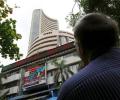
The S&P BSE Sensex ended 46 points lower at 24,824 and Nifty50 settled at 7,555, down by 8 points after hitting intra-day high of 7,600.45.
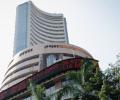
L&T, ONGC and banking scrips power gains in today's trade
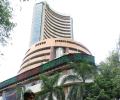
Custodian banks are selling dollars for their foreign fund clients.
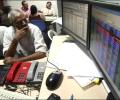
The Sensex ended down 134 points at 28,559 and the Nifty ended 35 points lower at 8,554

GDP growth in November is the second-highest since January 2012 when it had expanded 5.7%.
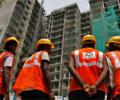
Based on the evidence at hand, Modi's goal of scripting a broader, lasting upturn appears some way off, says Rajesh Kumar Singh.

Bank of America Merrill Lynch believes this would ease pressures on CAD as $10 a bbl fall in oil price reduces CAD by $8 billion or 0.4 per cent of GDP.

The 30-share Sensex ended down 414 points at 25,481 and the 50-share Nifty slipped 119 points at 7,603.

The Sensex closed the day at 27,490, higher by 479 points and the Nifty ended at 8331.95, up 150.45 points.
